


A paradise made out of wooden blocks. At the Hamburger Bahnhof, the exhibition We Make Years Out of Hours by Lina Lapelytė connects generations, from young to old. Anyone can build anything, creating a wonderful, fantastical landscape in constant change. On a Saturday morning, we meet the Lithuanian artist at her residency in Berlin. It’s a beautiful old apartment. We sit in the kitchen, around an unusually long table. She makes coffee, and as the moka pot starts bubbling away, we begin our conversation.
JULIUS SEBASTIAN FÜHR: So this used to be Rebecca Horn’s apartment?
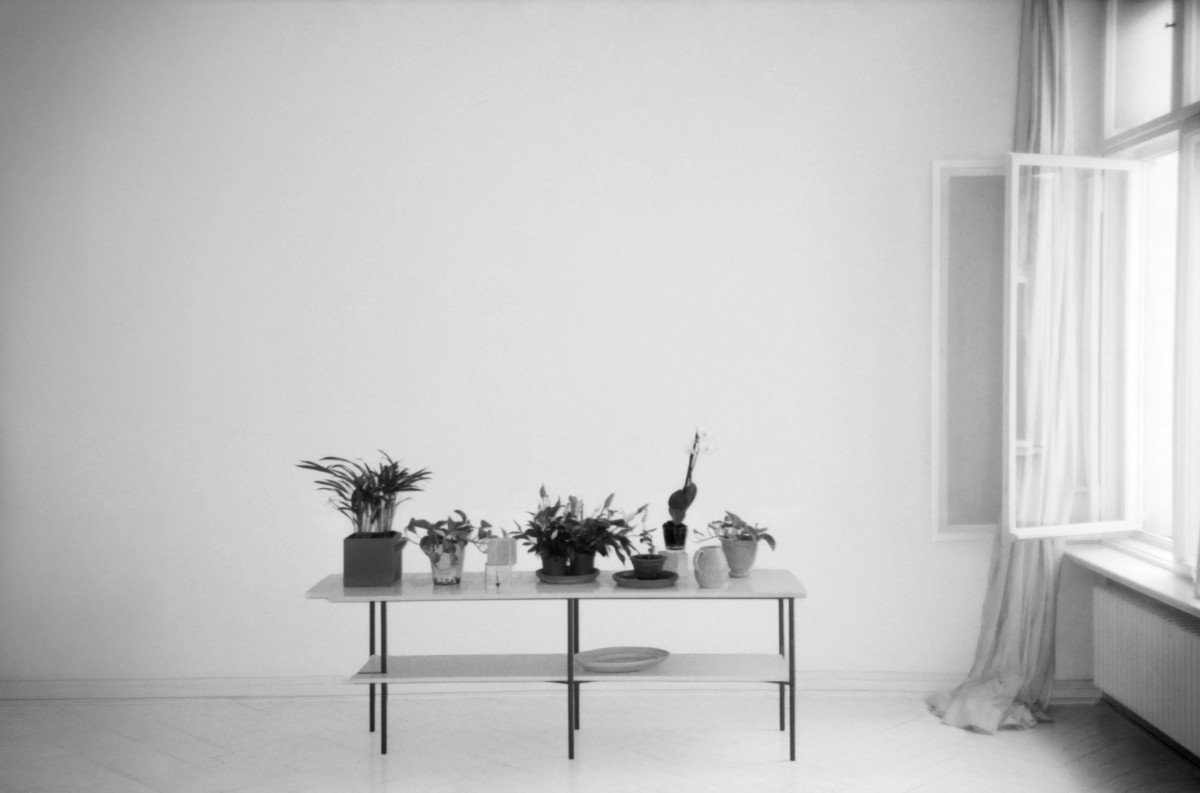
LINA LAPELYTĖ: She sadly passed away two years ago. But yes, we are sitting in Rebecca Horn’s Berlin residence. I was invited to take part in this artist residency by the DAAD and the Rebecca Horn Moontower Foundation, and I have been here since April. I’m the first person to live here since her passing, so I feel a certain responsibility to take care of the place. And I can feel Rebecca’s spirit, but it’s a very comforting feeling.
JSF: That must be quite a revelation, considering that only a year ago you got your first studio in Vilnius. And now you also have a temporary apartment in Berlin. It seems things are going well.
LL: My studio is more like a shabby little house. But actually, it’s been two years now since I finally got a place of my own to work. It’s in the northern part of Vilnius, near the headquarters of the famous Lithuanian unicorn Vinted. I can see it from my studio window. It might sound like a joke, but I’m serious: even though I have a studio now, I’m still a kind of living-room artist, or bedroom artist, or café artist, someone who makes everything out of nothing. I work with ideas, sound, and other people; my practice is quite ephemeral, so the idea of having a studio was never really that important.
JSF: And does having a studio affect your methodology?
LL: I wouldn’t say I’m an artist with a method. I don’t have a specific set of steps that leads me to a work. With me, anything can happen. Sometimes I use the studio for test shoots, and at other times it’s simply nice to close the door and be by myself. When I work with a lot of people, I give out all of myself, and I find that I increasingly need solitude. Maybe that’s the greatest joy of having a studio: being able to close the door.
JSF: Apart from the studio, public cafés, and now Berlin living rooms, you told me that you spend most of your time at the museum itself.
LL: Well, when I arrived in Berlin back in March, I did indeed spend most of my time at the museum preparing the new exhibition at Hamburger Bahnhof. It’s a large-scale installation made up of 400,000 wooden cubes measuring 10 by 10 by 10 centimetres, along with 24 performers. A performance of that scale requires extensive preparation. We received around 600 applications for the auditions and met about 300 people in person.
For me, it was very important not to choose performers based on their CVs alone, but to actually meet them and get a sense of their energy. Honestly, we could have selected many more. But of course we were limited, mainly for financial reasons. With the group we eventually selected, we rehearsed every other day for a month and a half. So I would arrive in Berlin and go straight to the museum to rehearse, then return to Vilnius whenever I could. And when I couldn’t, I would simply rehearse, rehearse, rehearse. That’s what I mean when I say that I was living in the museum.
JSF: Let’s talk about this new exhibition at Hamburger Bahnhof. It bears the beautifully poetic title We Make Years Out of Hours. What’s it about?
LL: Today, there are so many divisions that humanity has grown into. The work itself is a somewhat naïve proposal that tries to ask, on many different levels, whether political, social, or cultural, how we can live together. It approaches this question in interesting ways, for example through intergenerational connections.
JSF: And as you mentioned, apart from the installation in the entrance hall, there are 24 performers performing on Tuesdays, Thursdays, Saturdays, and Sundays.
Did you have a script for the performers, or what was your starting point for the piece?
LL: We didn’t start with a strict choreography. I didn’t want to dictate what they should say or do, but rather give a direction. When we met, we first needed to feel the space together, to touch the cubes, and to understand for ourselves what was truly relevant. Each person is unique and different from the others, as each individual brings their own experience and attitude. For me, it was important to arrive at a sense of togetherness within the group.
JSF: And what is the correct term: performers? Actors?
LL: I don’t really like the word performer, because they are not actually performing a script. And I don’t like acting either. I would rather say they are singers and builders. But I like to look for qualities in people that are unique and special. They are who they are. Some are actors or singers, but not originally from the performing arts, others are amateurs.
JSF: Are they performing as themselves?
LL: I hope so. But it’s difficult to be ourselves when one has undergone a particular training, such as acting. I think it’s very hard to find out who you are because training subconsciously adds layer upon layer to a person. And then, when feeling insecure, this trained layer can protect us and act as a shield, which feels comfortable.
JSF: So you try to get rid of this trained armor?
LL: Yes, I ask people to take these layers away, trying to reveal who they are. But that isn’t easy. And maybe that’s where we get a bit stuck, or we keep searching for a place of honesty.
JSF: What changes when these singers and builders accept their honest selves?
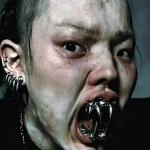
LL: Let me give you a different example. I made these two works, Study of Slope and The Mutes, where I invited people who sing out of tune or consider themselves tone deaf. At this point, the work almost becomes therapeutic. These were people who had been told to shut up in choirs and had shied away from singing because they felt ashamed. But in these works, we sang out of tune together. Amazing harmonies emerged that no one could ever have written. These people were suddenly brave enough and faced what they had feared before. And that’s what I mean, it’s a form of beauty where these unexpected moments result in being yourself.
JSF: Did this idea of musical imperfection have its origin in your background?
LL: Well, I am trained as a classical violinist. I had to deliver what was prescribed. I struggled with that a lot. And it took me a long time to be brave enough to understand that I’m not good enough to deliver the script, but actually that something beyond the script is good enough and valid too.
JSF: It seems your work is always about a state of fragility.
LL: I think that is a continuing pattern in my work. I’m quite interested in the fragile state of the human condition.
JSF: Was the starting point for the piece at Hamburger Bahnhof also a state of fragility?
LL: More so a state of frustration. In the last four years, we have all been living in deep sadness due to the unfair reality of the world. But of course, there is hope in humanity and for humanity. So I wanted to offer a new perspective. We have people from all around the world; the performers, in a way, are representing the world as a whole. And these voices are important to share in such a piece.
JSF: Other voices are in the background, fragments of poems are being amplified into the entry hall.
LL: It’s not in the background, it’s in the foreground.
JSF: What was the story behind these poems?
LL: Well, the poetry, similar to the performers, is a mixture of voices from different cultures. I looked into poets who lived in difficult times and experienced war. I wanted to turn the poetry I read into a song. For me, words themselves can be music. I chose the fragments based on intuition, but I also tried to look for poetry that reflects the difficulties of living, somehow navigating the challenges of experiencing hard times, and that could still, in some way, offer hope.
JSF: In an interview, you said that you thought language was dead, and then you discovered poetry.
LL: I was disappointed by the manipulative aspect of language, mainly in politics, where it is instrumentalized to divide people. I made a piece with 100 children who imitated animals, called The Speech. I was thinking about language and the limitations it has. As a musician, I sometimes believe that the resonances of certain harmonies can do more than very elaborate texts. I wouldn’t say language is dead in general. I think I was more referring to the sadness of our inability to communicate in a way that brings us closer to peace. You know, poetry is everywhere. Pop songs are poetry too.
JSF: What epiphany did poetry create for you?
LL: During the preparation, I read a lot of poetry. Poetry can really answer unanswered questions.
JSF: Do you fear that poetry might be fading in today’s world?
LL: Perhaps it is a bit of a niche genre. I wish it weren’t, because there are many poets creating great poetry. And as I mentioned, poets are able to condense complex issues into just a few lines. I think that in difficult times, when there is nothing else possible to create, perhaps you can still sing and write, and maybe that’s why it will prevail.
JSF: In a world filled with noise, is silence the most radical element?
LL: Yes, but in art there are no rules.
JSF: Are there hierarchies in art?
LL: Well, no art form is better than another. It’s about the energy we share. We live in a world of too much noise, if you will. But at the same time, everything is necessary. There is no hierarchy of occupations; all occupations are equal, the gardener is equal to the artist. If you were to ask me if poetry is important, well, of course, but it isn’t the most important. At certain times, there may be no other means of expression, and being a poet could be the only way to survive. But that isn’t the case today. All art forms are equally important.
JSF: You mentioned that words can be music. It seems, you are still functioning as a musician in your work.
LL: Yes, I function as a musician, even if it isn’t music.
JSF: And are you still active as a musician?
LL: I am still active in the improvised music scene. What fascinates me about improvising musicians is their ability to listen carefully. As humans, we are not really taught how to be good listeners, and I think that might very well be at the root of many of our issues.
JSF: Improvising also entails countless intuitive decisions.
LL: And you know, I think what ultimately distinguishes my work from the work of others lies in exactly those intuitive details. I like things to be a particular way. Sometimes I might think this or that doesn’t matter, but this instinct is essential, because it is what makes my work my work, all these seemingly small decisions that, in the end, do matter.