

The ferry docks at the harbor with a deep, rumbling bass. A throng of tourists pours off the ship in a cacophony of voices, and we follow the flow of people towards Copenhagen Contemporary. Inside a dark exhibition room, machines stand on either side, occasionally breathing soap bubbles filled with steam into the space. The bubbles drift gently through the room, delicate and fragile like mystical creatures, until they suddenly burst, releasing their white mist into the darkness, where it slowly disperses and disappears. This must be what physical poems look like. The work is called Beyond the Horizon, by A.A. Murakami.
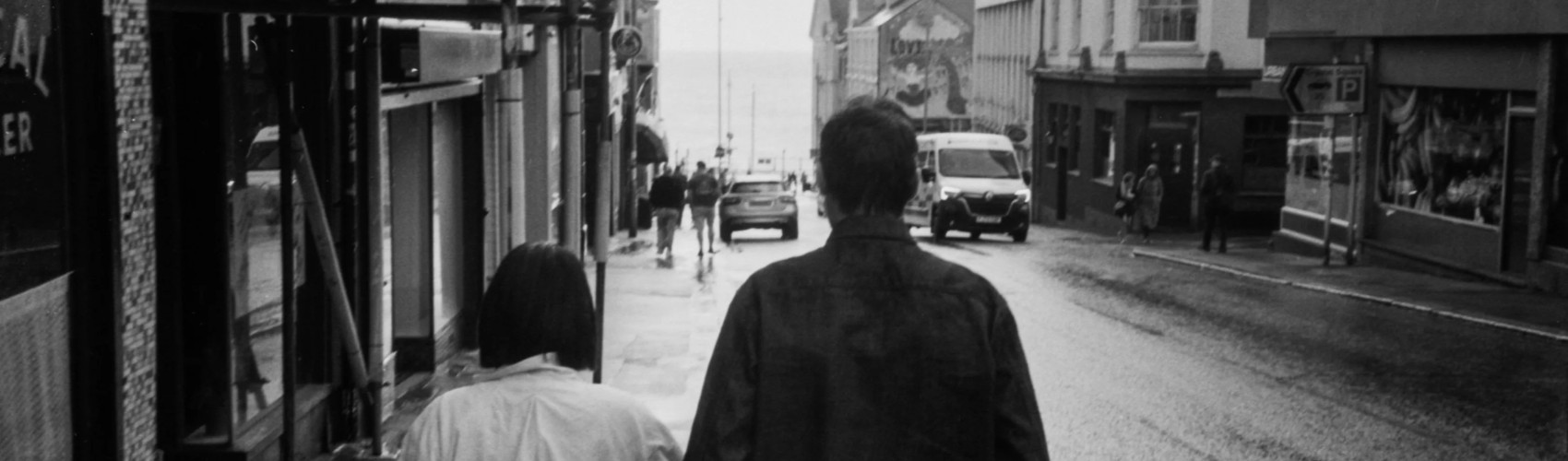
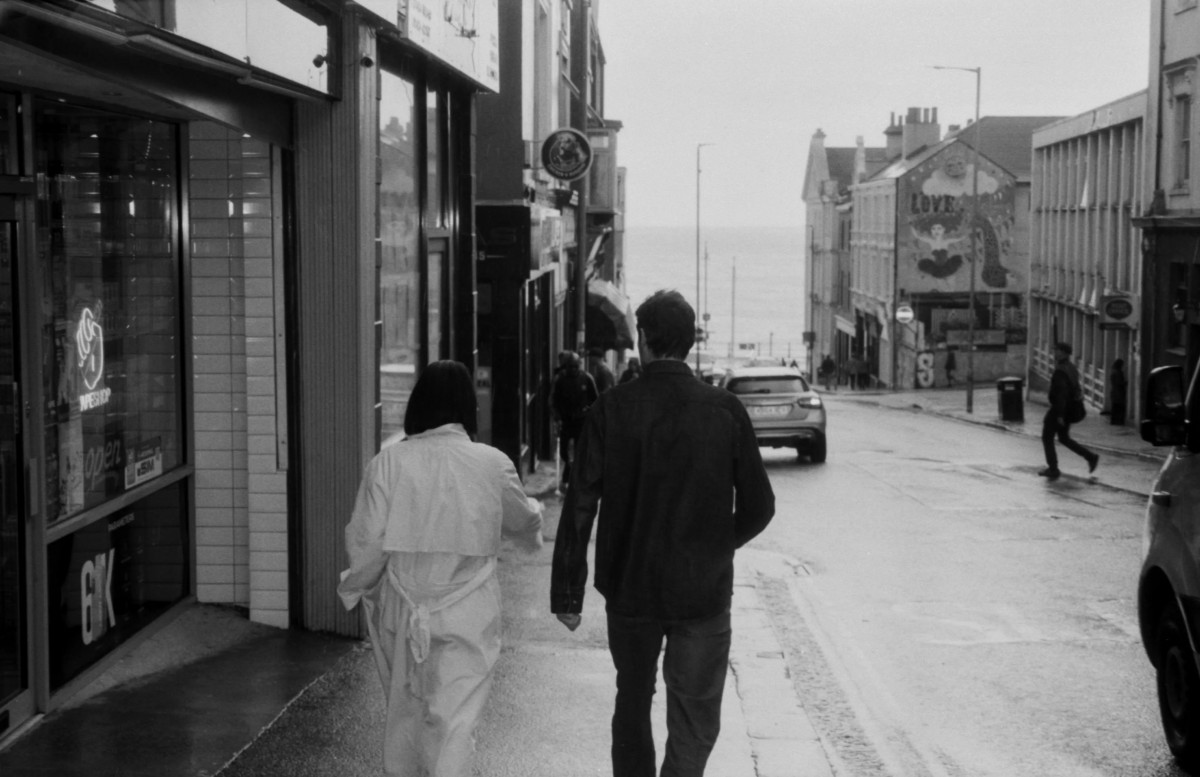
From London, we take the train to Hastings. By the time we arrive, it is late at night. We walk through the surprisingly lively town to our Airbnb.
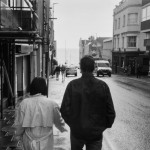
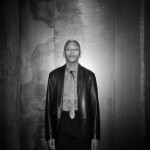
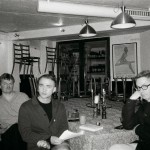
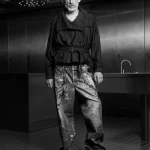
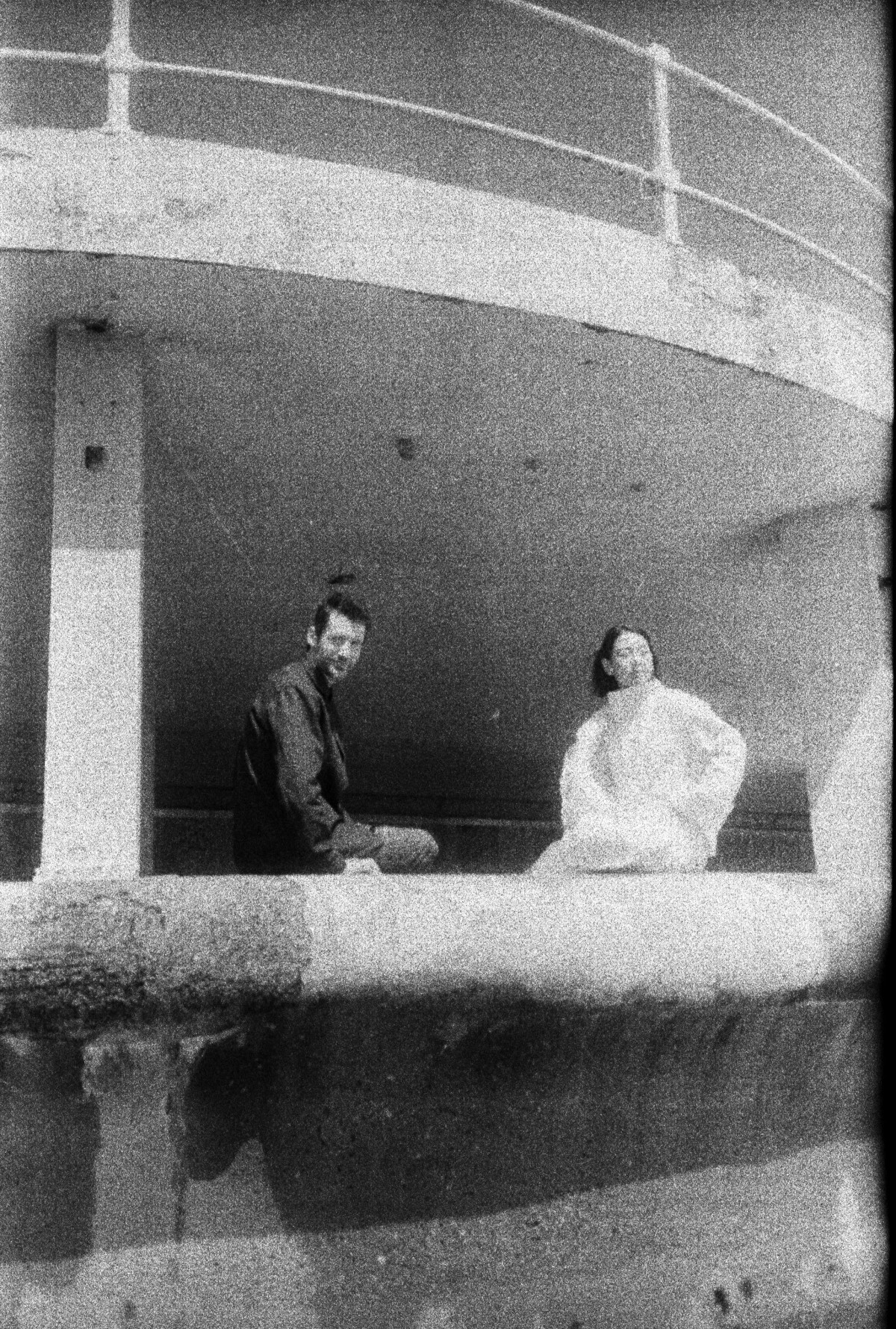
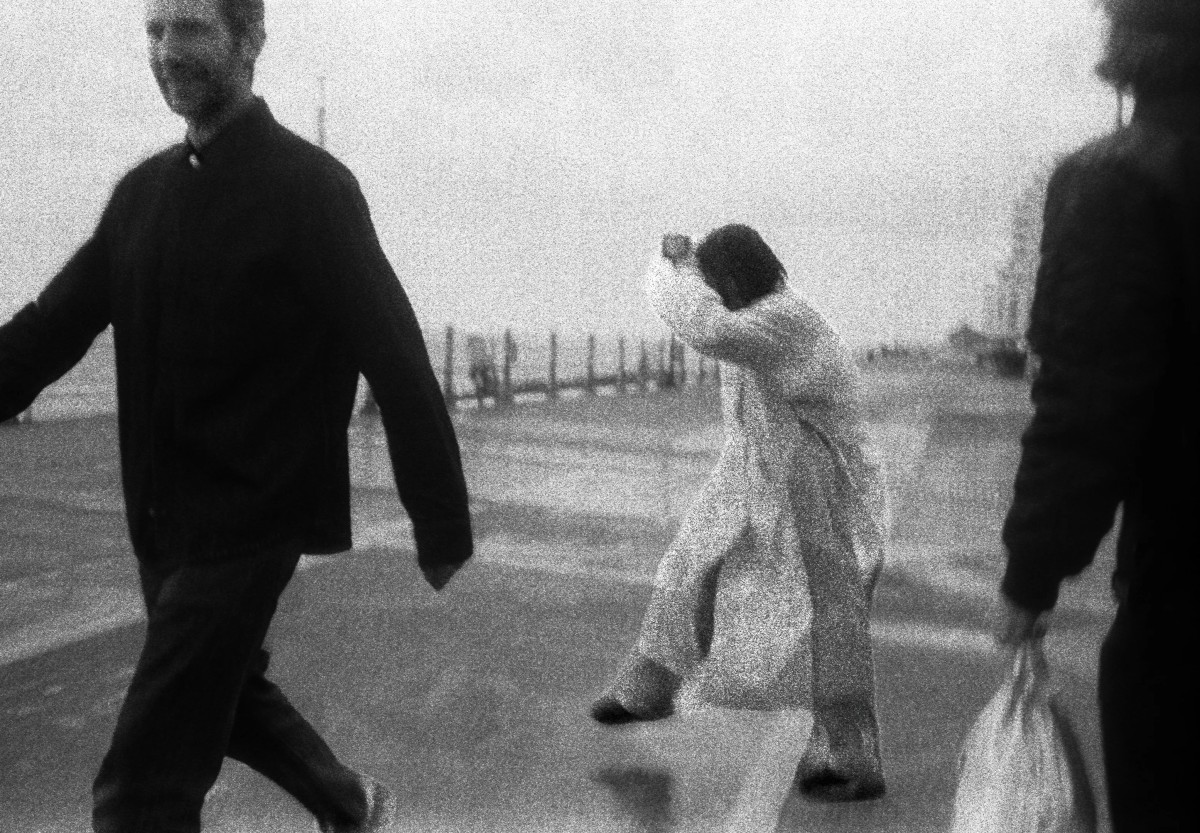
The next morning, we wake up early and walk along the beach. The morning sun is blazing, and the wind lashes around us. Down a side street, we enter the café we had arranged to meet at. So far, all the seats are empty; we must be the first ones there. The smell of freshly baked pastries fills the air. We order coffee and croissants. Shortly afterwards, the artist duo A.A. Murakami arrives. After an hour-long conversation, we dart through the suddenly appearing rain, down to the pier. Along the way, Leif portrays the artist duo and married couple.
JULIUS SEBASTIAN FÜHR: We were actually thinking of meeting at the Venice Biennale, but due to time constraints we ended up meeting here in Hastings instead. What were you exhibiting in the Lagoon City?
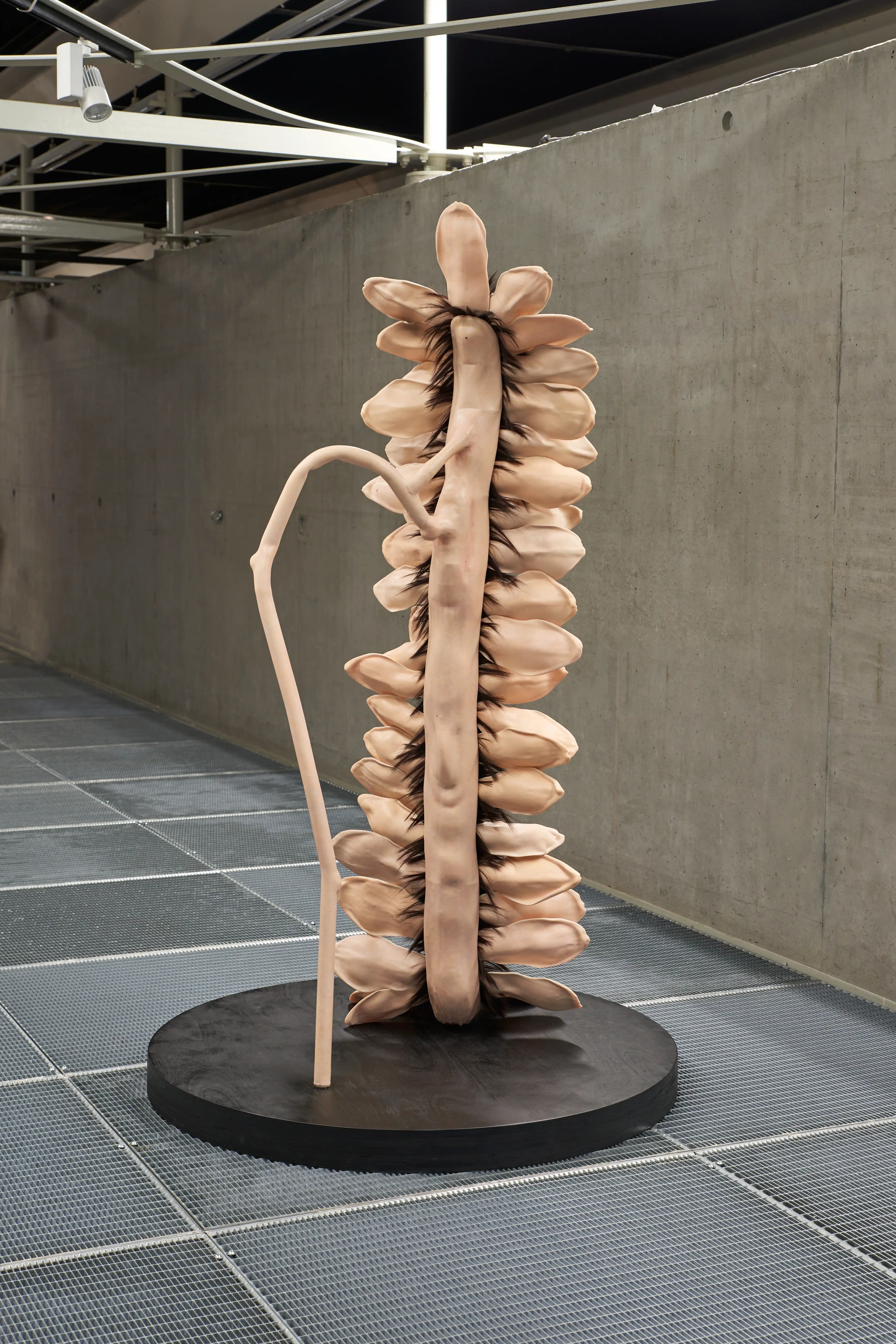
AZUSA MURAKAMI: We exhibited a new knitted tapestry piece, called The Sun Sets in a Shell, at the Uzbekistan Pavilion of the Venice Biennale. The work builds on our earlier project, A Thousand Layers of Stomach, which laid the foundation for this new piece. It explores novel patterns generated through algorithms we developed, capable of producing an infinite variety of shell-like forms.
JSF: Why did the Uzbekistan Pavilion invite you, as non-Uzbek artists, to exhibit?
ALEXANDER GROVES: The Uzbekistan Pavilion has a notably pluralistic and open approach: alongside four Uzbek artists, it featured artists from China, Vietnam, and us, representing Japan. Since graduating, we have lived and worked in many different cities, such as Sao Paulo, Shanghai, Paris and New York. In that sense, we feel quite nomadic. So this international context felt closely aligned with our own journey.
JSF: The tapestry The Sun Sets in a Shell is rooted in Uzbek history.
AG: Uzbekistan is a relatively young nation, emerging after the Soviet reorganization of Central Asia in 1924, and is located along the historic Silk Road. The Aral Sea, which lies between Uzbekistan and Kazakhstan, was once the fourth-largest inland sea in the world, but has since become an ecological disaster. The Soviets diverted the rivers to irrigate agriculture, causing the sea to shrink dramatically. Today, much of the former seabed has turned into desert. We drew on a species that once lived there, the zebra mussel, as a starting point. From there, we developed a code based on biological mathematics, exploring how patterns in nature can emerge from formless origins. Building on this, as Azusa mentioned, we created an algorithm capable of generating these kinds of patterns.
LEIF ARNE ASMUS: Out of my experience, mostly research available regarding shell patterns, is nearly all based on the three-dimensional form of shells.
AG: Exactly, it was really hard to find anyone that we could work with that was based on the two-dimensional patterns. We looked into Alan Turing, Stephen Wolfram, and other biological mathematicians who attempt to describe natural patterns through mathematics.
JSF: Could you elaborate on how these mathematical ideas relate to biological pattern formation?
AG: Well, let’s take Alan Turing as an example. He developed this idea after the Second World War, when Nazi codes had been cracked. He then became interested in decoding patterns in nature. His theory proposed that there is underlying mathematics behind natural patterns, which he explored using early computers. He developed some of the first reaction-diffusion models, which can generate patterns such as leopard spots. He suggested that structures and forms can emerge from initially formless states. Interestingly, at the time, biologists considered this idea almost a joke, since DNA had only recently been discovered and was believed to fully determine everything, including biological patterning. Over the past twenty years, however, evidence has emerged supporting Turing’s theory. Scientists have identified chemical precursors involved in reaction-diffusion processes that can switch pattern formation on and off. It now appears that this mechanism underlies many biological structures, for example, the formation of fingers in a developing hand. Processes such as the orientation of an embryo after sperm entry are also related to these mechanisms. These patterns are not fixed rigidly by DNA alone; rather, they emerge from chemical and physical interactions governed in part by the reaction-diffusion rules proposed by Turing.
JSF: You had an epiphany while having dinner in Tokyo, eating miso soup with asari clams, which was linked to the idea of Alan Turing.
AG: When eating miso soup, you pull these clams out of a cloudy broth, and they reveal a remarkable variety of patterns and colors. Each one is unique and different, like forms in nature, or even our fingerprints. They may appear similar at first glance, but especially with these shells, every pattern is distinct; some even resemble landscapes. In a way, this points towards Alan Turing’s reaction-diffusion theory, rather than being directly encoded in DNA alone. Identical twins, for example, share the same DNA, yet their fingerprints remain completely unique.
JSF: This investigation into the mathematics underlying patterns in nature, and the creation of a new form based on this research, illustrates your artistic approach quite well. You have mentioned that you create phenomena akin to nature, but which are not found in the natural world.
AG: I’d say everyone is inspired by nature, but one of the things that sets us apart is that we’re not really creating work that represents nature. We’re not making pieces that look like nature or trying to recreate it, nor are we attempting to reproduce natural phenomena that already exist. There are people who do that fantastically well, rainbows, clouds, and many other natural effects.
What we do instead is create almost a new form of nature. We work with technology, but there is a moment when your intent, your code, and everything else slip out of the digital realm and into the physical world. Once that happens, it becomes subject to gravity, turbulence, molecular forces, and magnetism. So in a sense, we’re working with nature. For example, bubbles and fog rings are natural phenomena, but they are not something you would normally encounter in that configuration in the natural world, like a tree shedding bubbles. So the work can feel familiar because you’re witnessing natural phenomena and the laws of physics at play.
At the same time, that’s why we sometimes refer to it as unnatural phenomena.
JSF: You combine these unnatural phenomena with Japanese concepts such as mono no aware or tsukimi. These ideas are deeply rooted in transience and the appreciation of fleeting moments, which you connect with technology through what you describe as ephemeral tech.
AM: Well, ephemeral is often used in a rather poetic sense. You can feel something as ephemeral, but it is not truly ephemeral in a literal, physical sense. A fluttering fabric, for example, might feel ephemeral, but it is still materially present. For us, ephemeral in its strict, literal sense refers to the witnessing of something emerging into existence, and then dissolving and disappearing again, slipping out of existence entirely. It is not just about the feeling of transience, but about the actual physical lifecycle of a phenomenon. This became particularly clear to us during the M+ exhibition in Hong Kong, back in 2024, where we had the giant cloud works and the fog rings in separate rooms. We realized that all of these works are fundamentally about that precise moment of existence, of something appearing, persisting briefly, and then vanishing again.
In Japan this appreciation of the fleeting nature of things is intrinsically embedded into the culture. For example, once a year, maybe for a few weeks, the cherry blossoms bloom, and each time you encounter them, you’re a different person, one year has passed, and you are at a different stage in your life. And there is a deep awareness, that this is something, that will never come again. This is a fleeting moment, but also, I am a fleeting moment and we are sharing a fleeting moment in time. And that is what we want to achieve and create with our artworks.
JSF: Has this connection to Japanese culture been a natural result of you having lived there for six years?
AM: We don’t intentionally combine our work with Japanese concepts, rather, it’s something that has emerged naturally from within our practice. Living so close to nature has influenced the way we think and work, and that aspect of our work has become much more pronounced over time.
JSF: This constant theme of the existential, the fleeting nature of life and nature, seems very poetic. Have haikus played a role in your thinking or practice?
AM: What fascinates me about haikus is that they are so pure because all unimportant and excess elements have been removed, distilling them to the essence of an idea. And that is something which we also always try to achieve in our work. We use a lot of technology, but we don’t want the technology to be the main or most prominent part, so we hide it. That can be quite difficult to achieve, something so simple in appearance, yet created with technology, as there are many complications that, as a viewer, you cannot see. And I guess when writing a haiku, it takes a long time to achieve this point of essence. In our case, it takes even more technology to make it appear that way.
But we don’t hide the technology completely, because we don’t want to create a kind of magic trick. For example, we don’t use a soundtrack with our works. We want the sounds to come from the machines themselves. At the same time, we have to be careful, because we don’t want the machines to be too loud, so we intentionally use very quiet motors. Take, for example, the bubble dress we created for the Met Gala with Iris van Herpen. It is very quiet, you don’t hear the fans blowing the bubbles, which is unusual for fans. We had to figure out how to remove that sound, because we wanted to avoid it sounding like a hairdryer. So this process of stripping things away is similar to a haiku. And I think it also speaks to the idea of trying to express something universal: having less can actually make something more open.
JSF: Is existence the result of the work, or is it the work itself?
AG: James Turrell says about his light-space works that he is not using light to reveal something, light is the revelation. So light is the subject, and it is the material he is working with. And for us, it’s existence. Because you are witnessing something coming into being and going out of existence. That intangible, fleeting quality, what it means for something to exist in the first place, is really at the heart of ephemeral tech.
JSF: How do you engineer something that remains alive, or appears alive, rather than becoming merely stable within a technical system, something that itself might even feel fragile?
AG: I’d say the problem is actually the opposite: the challenge is trying to achieve stability. What we are working with are phenomena that exist within such a narrow bandwidth of success that even a small deviation can cause them to fail. With a bubble, for example, you only need one parameter to be slightly off for it not to work. And machines drift over time. An installation might work perfectly at the beginning, but after nine months a lot of entropy creeps into the system, and something will break or get clogged, whether it’s timing that begins to drift, or environmental factors like temperature, wind, or fluctuations in humidity. Bubbles don’t like dry air or colder conditions. The whole system needs to function together, like the organs in a body. In that sense, it is like life itself. Because as soon as you don’t have the bubbles, suddenly there is no show.
JSF: So how do you monitor these processes in order to ensure the installation stays intact?
AG: We spend a huge amount of time and resources making our systems autonomous. As we often send them to places across the world, because we can’t leave a technician on site, they have to keep working by themselves.
JSF: I assume you use the latest developments in artificial intelligence?
AG: Well, intelligence hasn’t simply evolved in a linear sense; it has evolved through a kind of Darwinian process, because intelligence is intrinsically useful for keeping systems alive. At the moment, we have systems that are autonomous, but not really intelligent in themselves. The intelligence exists in the form of technicians who keep them alive. If something goes wrong and the person on site can’t resolve it, they get on a call with us, and then we have a remote team stepping in. That’s where human intelligence comes in to keep everything functioning.
We’re interested in how AI might extend that. In a sense, it could become like a technician you leave behind, continuously monitoring things like too much soap, too little water, or any other variable that affects the system. We call that physical AI. We’re not interested in using AI to generate imagery within a purely digital realm, it can do much more than that. Instead, we see it as a tool to push the boundaries of what we can build physically. We already have installations that we want to realize, but they require a level of complexity and responsiveness that makes it impossible to maintain them without constant human intervention. AI opens up the possibility of making them truly autonomous, so we can send them anywhere in the world, leave them to operate remotely, and allow them to function for longer periods of time.